
Automatic or Quartz: Which Movement Fits Your Lifestyle?
A well-chosen accessory or habit becomes useful because it reflects real life rather than a generic ideal. The details below focus on decisions that make the subject easier to use, enjoy, and keep over time. Movement choice is one of those decisions that looks technical on the surface but is really about habits: how often a watch is worn, how it is stored between wears, and how much attention its owner wants to give it.
Rather than treating automatic and quartz as a hierarchy, it helps to treat them as two different relationships with time. One depends on motion and periodic resetting, the other on a battery and near-silent reliability. Understanding what each actually asks of its owner, day to day, makes the eventual choice far more durable than picking based on price or prestige alone.
Start With The Way You Want To Own A Watch
The movement is less about prestige than about routine. An automatic watch winds through wrist motion and asks its owner to accept a mechanical relationship with time. A quartz watch runs on a battery and is designed for low-friction accuracy. Neither choice is universally better. The useful question is what happens on the days you do not think about your watch at all.
Begin by looking at Julliany, a Bulgarian destination for Swiss watches, to compare styles before deciding how the watch will fit into your week. A daily wearer may enjoy either movement. A watch rotated among several pieces may stop between wears if it is automatic, while quartz will usually remain ready. Someone who travels often or relies on exact meeting times may value the set-and-forget character of quartz. Someone who enjoys winding, setting, and observing a mechanism may prefer automatic.
A clear answer emerges once the owner’s tolerance for maintenance and resetting is honestly considered. The movement should reduce friction, not create a new chore. Starting with the way you want to own a watch keeps the choice connected to the real situation instead of an abstract rule.
Quartz Offers Practical Precision
Quartz movements regulate time through the vibration of a crystal. That system is inexpensive to produce accurately and requires little intervention beyond a battery change. It is a sensible fit for school, work, travel, exercise, and any situation where the watch needs to be ready after sitting in a drawer. Quartz also allows slim cases because the movement uses less vertical space than many mechanical alternatives.
NIST explains that a watch with a quartz frequency 0.1 Hz off would gain or lose roughly 0.26 seconds per day. The figure illustrates why quartz became the default for reliable everyday timekeeping. Real-world accuracy varies by movement and temperature, but the practical experience remains straightforward. Put it on, check the date if needed, and go. The benefit is consistency rather than ceremony. Battery replacement intervals depend on the movement and features, so a simple three-hand quartz model often stays especially easy to own. Looking specifically at quartz offers practical precision, keeping the choice connected to the real situation instead of an abstract rule.
Automatic Movements Reward Regular Use
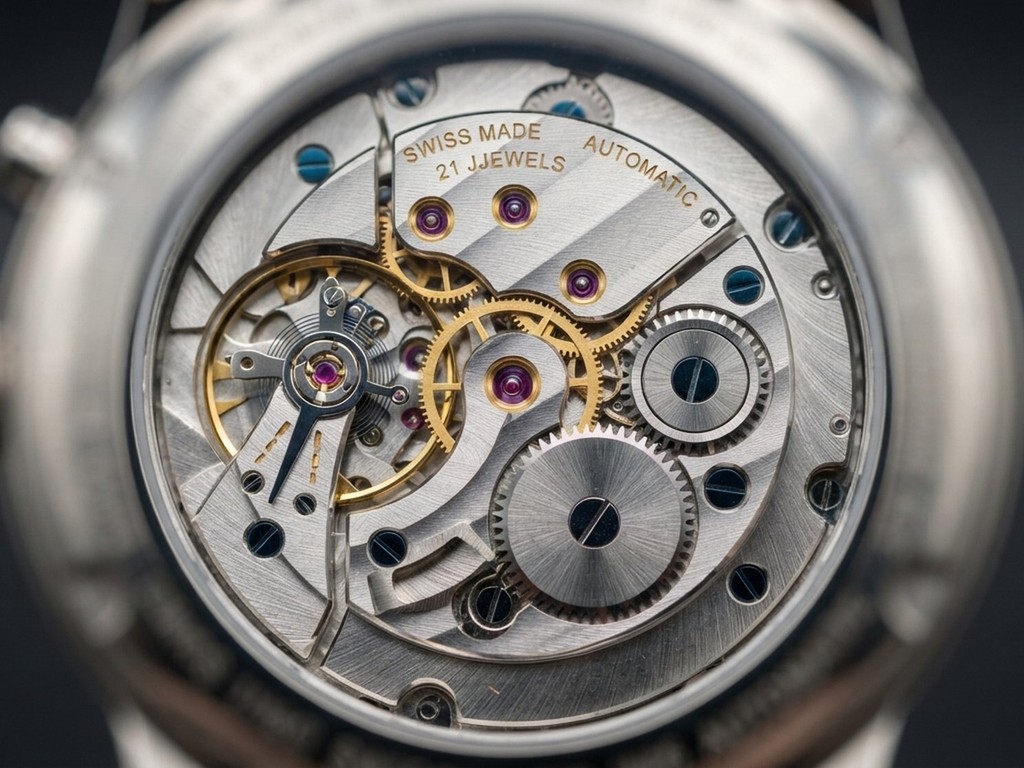
An automatic movement converts wrist motion into stored energy through a rotor and mainspring. The watch does not need a battery, but it does need enough motion to stay wound. When it stops, resetting the time and date becomes part of the ritual. Some owners find that process satisfying because it creates attention around an object made of many moving parts.
Mechanical ownership also includes service. Lubricants age, seals need checking, and water resistance depends on maintenance rather than a label alone. The cost and interval differ by model and use, so it is worth asking before buying. An automatic watch makes most sense for someone who plans to wear it often and appreciates the object beyond its basic timekeeping job. An automatic watch is also sensitive to shocks and magnetism in ways that vary by construction. Care instructions should be treated as part of the purchase. Looking specifically at automatic movements rewards regular use and keeps the choice connected to the real situation instead of an abstract rule.
Compare The Tradeoffs Honestly
Quartz favors accuracy, convenience, and a broad range of prices. Automatic favors mechanical interest, continuity with traditional watchmaking, and the visible pleasure of a moving seconds hand. Case design, build quality, and fit still matter in both categories. An uncomfortable automatic will not become meaningful because it has a rotor, and a thoughtfully designed quartz piece is not lesser because it uses a battery.
A second consideration is disruption. A quartz battery change is occasional and predictable. An automatic watch can stop after a quiet weekend, which is harmless but inconvenient for a person who dislikes resetting anything. Conversely, a person who already has a morning ritual may enjoy checking an automatic before leaving. The right movement should fit habits that already exist. Cost over time is different from purchase price. Periodic mechanical service can be substantial, while quartz ownership usually concentrates its maintenance in smaller visits. Looking specifically at the tradeoffs honestly keeps the choice connected to the real situation instead of an abstract rule.
Let Purpose Decide Before Price Does
Choose quartz for a first watch, a travel watch, a dependable daily piece, or a gift for someone who values ease. Choose automatic for a person drawn to mechanics, design history, and the small interaction of setting a watch. There are exceptions, but these starting points prevent a purchase from being driven by a marketing label.
Try the watch on if possible, or check the lug-to-lug measurement alongside case diameter. Read the water-resistance guidance and find out what servicing is available locally. Movement matters, yet the watch that gets worn is usually the one that feels comfortable, reads clearly, and fits naturally with the owner's schedule. A final check of warranty terms and service access prevents the movement decision from becoming an afterthought once the watch is already on the wrist. Looking specifically at let purpose decide before price does keeps the choice connected to the real situation instead of an abstract rule.